
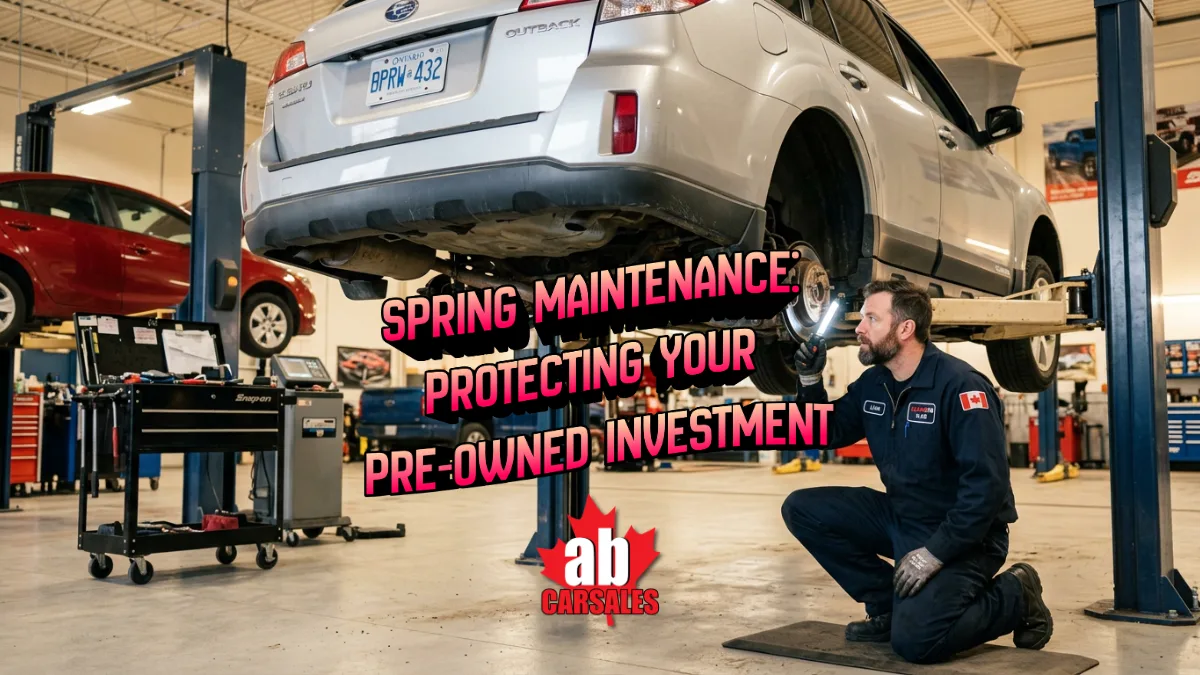
The 60-Minute Spring Ritual That Adds Years to Your Used Vehicle
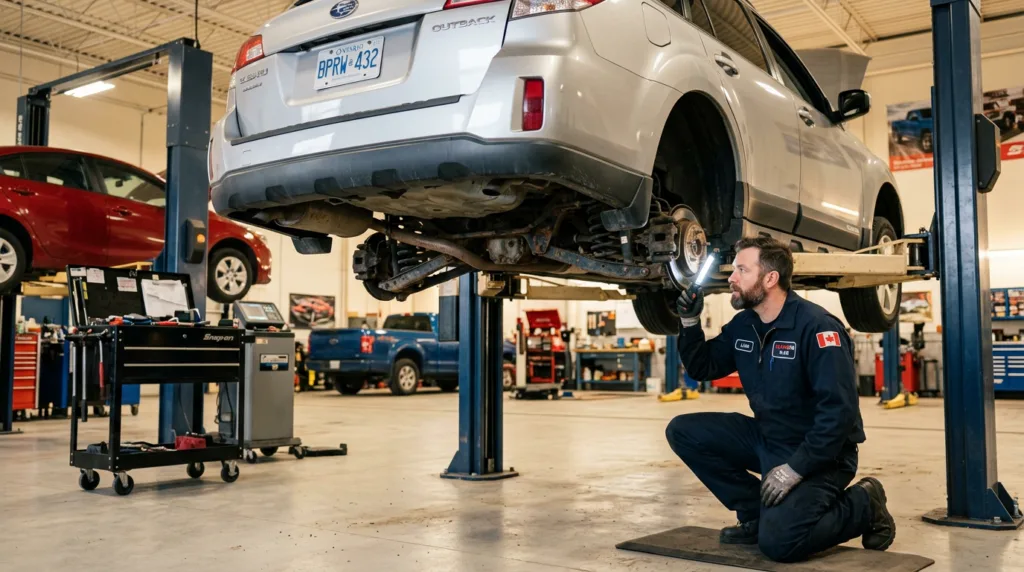
Every spring, Canadian roads reveal their winter damage — and so do the vehicles that drove on them. Here's how to protect yours.
Why Spring Is the Most Important Season for Your Vehicle
Winter in Canada is beautiful. Spring in Canada is brutal — on your vehicle.
From October through April, your pre-owned vehicle battled road salt, sub-zero temperatures, potholes, freeze-thaw cycles, and moisture that crept into every seam and joint it could find. Most of the damage is invisible in March. By August, if you've ignored it, it's expensive.
The good news? A focused 60-minute spring inspection — most of it done by your technician at your regular service appointment — can catch the small problems before they become big ones. It also protects the single biggest factor in your vehicle's resale value: its condition and documented history.
This isn't about spending money unnecessarily. It's about being smart with the money you've already spent.
The Enemy Under Your Vehicle: Road Salt

Let's start where most drivers never look — underneath.
Canadian roads receive millions of tonnes of road salt every winter. In Ontario alone, an estimated 3 to 5 million tonnes are applied annually. Salt is essential for safe roads, but it's devastating to your vehicle. When road salt mixes with slush and moisture, it doesn't simply rinse away — it clings to metal surfaces, creeps into seams and welds, and accelerates oxidation (rust) at a dramatically faster rate than normal moisture exposure.
The AAA warned as recently as February 2026 that salt damage is "easy to miss because it happens underneath the vehicle," affecting brake lines, fuel lines, suspension components, and frame rails — often invisibly until a component fails. Because corrosion is classified as normal wear and tear, it is typically not covered by insurance.
For a 3–8-year-old pre-owned vehicle — the sweet spot where most Canadians are shopping — this matters a great deal. Vehicles in this age range have already been through multiple Canadian winters. A neglected underbody can turn into a rust problem that cuts thousands of dollars off your trade-in value and creates a genuine safety issue.
What to look for:
- White powdery deposits on frame rails, brake line brackets, and suspension joints — dried salt that's bonded to bare metal
- Rust scaling or bubbling at wheel wells, rocker panels, and the lower doors
- Any sign of rust near brake lines or fuel lines, which are safety-critical components
The fix is simple and inexpensive: a thorough undercarriage wash at a facility with underbody spray capability, followed by a lift inspection with your technician. If you catch surface rust early, a rust inhibitor applied now costs a fraction of what a structural repair costs later.
Tires: The Right Time to Swap in Canada
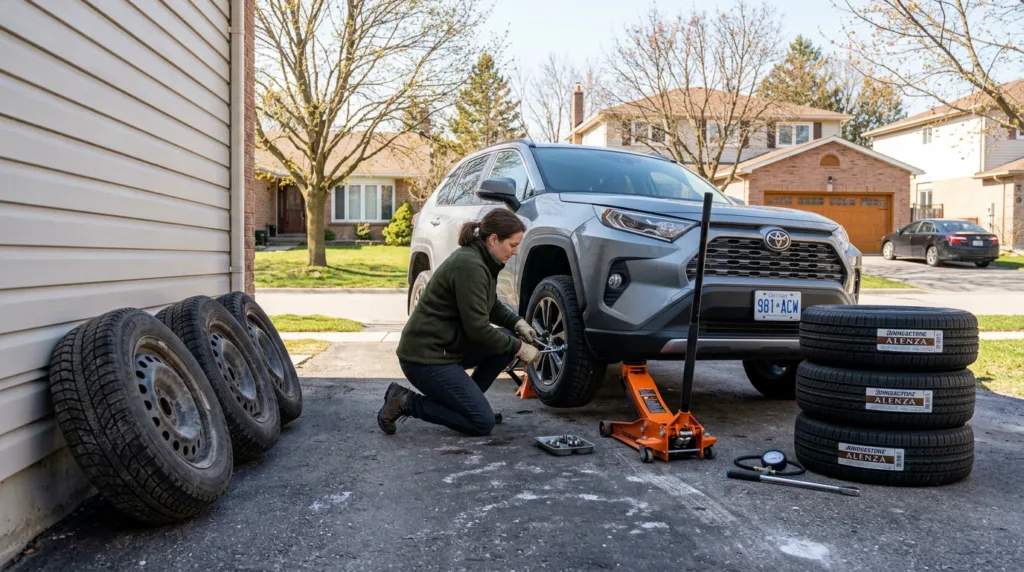
The rule every Canadian driver should know: wait until temperatures are consistently above 7°C before swapping off your winter tires.
Why does 7°C matter? Winter tires are made with softer rubber compounds designed to stay pliable in the cold and grip snow and ice. Once temperatures climb and stay above that threshold, those same soft compounds wear down on warm, dry pavement at an accelerated rate — shortening the life of tires you may have paid $800–$1,200 for. Across most of Canada, the ideal swap window falls between late March and early May, though it varies by region and year.
When you bring the vehicle in for your tire swap, bundle a few critical items into the same visit:
- Tire rotation: Moving front tires to the rear (and vice versa) evens out wear patterns, extends tire life, and improves fuel efficiency. Front tires bear more weight and wear faster, especially on front-wheel-drive vehicles.
- Wheel alignment check: Canadian roads are famous for their spring potholes. A single significant pothole impact can bend control arms, crack bushings, and throw off your alignment — leading to uneven tire wear, reduced fuel efficiency, and steering instability. CAA data suggests the average cost of pothole-related repairs exceeds $300, with some repairs topping $1,000. An alignment check is a fraction of that cost.
- Tire pressure inspection: Temperature swings between winter and spring affect tire pressure. Under-inflated tires reduce fuel economy and accelerate wear.
Pro tip from NAPA Canada: Before storing your winter tires, wash off the salt and store them in a cool, dry location. Salt left on stored tires corrodes the steel belts and degrades the rubber.
If you need new rubber, reach out to us, we'll get you the best price possible!
Brakes, Suspension, and Fluids: The Post-Winter Check
Six months of winter driving puts measurable stress on your vehicle's mechanical systems. Spring is the right time to inspect them — before you're driving on summer highways at full speed.
Salt and moisture are corrosive to brake rotors and calipers. Surface rust on rotors after winter storage is normal and usually clears itself within a few stops. But accelerated rust from salt exposure can cause uneven rotor wear, reduced stopping power, and in severe cases, seized brake calipers. Have your technician measure rotor thickness and inspect pad wear while the tires are already off. It's the most convenient and cost-effective time to do it.
Your suspension took the winter's punishment one pothole at a time. Control arm bushings, ball joints, strut mounts, and sway bar links are all vulnerable to the sharp vertical impacts of pothole strikes. Damage doesn't always show up as an immediate failure — it often appears gradually as vibration, wandering steering, or a clunking noise over bumps. Left unaddressed, worn suspension components create a safety risk and accelerate tire wear, costing you more money over time. Ask your technician to do a visual and hands-on suspension inspection whenever you're in for your spring service.
If you're within a few thousand kilometres of your oil change interval, spring is the logical time to do it. Winter is hard on engine oil — cold-start cycles, short trips where the oil never fully warms up, and moisture condensation inside the engine all degrade oil quality faster. While you're at it, check and top off:
- Coolant (antifreeze ratio should be checked — a compromised mix can boil in summer heat)
- Brake fluid (absorbs moisture over time, lowering its boiling point)
- Power steering fluid and transmission fluid if applicable
- Windshield washer fluid (switch to a spring/summer formula)
Winter rubber takes a beating from ice, frost, and cold. If your blades are streaking or skipping, spring rain will make it very obvious very quickly. Wiper blades are inexpensive insurance.
The Resale Value Connection: Why This Matters Beyond Safety

Here's the part most owners don't think about until it's too late.
A well-maintained pre-owned vehicle with documented service history sells faster and for significantly more money than one without records. Industry appraisers in Canada estimate that complete service records can add 10–15% to a vehicle's trade-in value. On a $20,000 vehicle, that's $2,000–$3,000 in real money, simply from keeping your receipts and staying on schedule.
Why does documentation matter so much? Because appraisers price for unknown risk. A vehicle with no paper trail forces a dealer to assume the worst about what's been neglected — and that assumption gets baked into a lower offer. A thick service folder proves the oil was changed on time, the brakes were serviced, and no deferred maintenance is waiting to ambush the next owner. Lower risk equals a higher bid.
Regular maintenance history also matters on vehicle history reports — the same reports your next buyer will pull before making an offer. Documented oil changes, tire rotations, brake services, and inspections all strengthen the vehicle's profile.
The math is simple: a spring service visit that costs $150–$300 in labour and parts can protect $2,000–$3,000 in trade-in value and prevent a $1,000+ repair bill later in the summer. It is one of the highest-return investments in vehicle ownership.
Your Spring 60-Minute Checklist
Bring this list to your service appointment. A good technician will walk through most of it during a standard seasonal visit.
| Item | What to Check | Why It Matters |
| Undercarriage wash + inspection | Salt buildup, rust on brake/fuel lines, frame corrosion | Safety + prevents structural rust |
| Winter tire swap | Once temps consistently above 7°C | Protects tire life and handling |
| Tire rotation | Even up front/rear wear | Extends tire life, improves fuel economy |
| Wheel alignment | Especially after a pothole hit | Prevents uneven wear and steering issues |
| Brake inspection | Pad thickness, rotor condition, caliper function | Safety + avoid summer highway issues |
| Suspension check | Bushings, ball joints, strut mounts | Catch pothole damage early |
| Oil change | If near interval | Protects engine from winter-degraded oil |
| Fluid top-off | Coolant, brake fluid, washer fluid | Prepare for summer heat and spring rain |
| Wiper blades | Inspect for streaking or tearing | Safety for spring rain |
| Keep all receipts | Store in glove box folder | Protects and builds resale value |
Spring maintenance on a pre-owned vehicle isn't a cost — it's an investment with a clear return.
The vehicles that come to market in the best condition, with the cleanest history, attract the most buyers and command the highest prices. The owners who get there didn't do anything magical. They just stayed consistent: one seasonal service visit, a folder of receipts, and a technician who knew the vehicle well.
You've already made a smart decision by buying pre-owned and letting someone else take the hardest depreciation hit. Protect that decision by keeping the vehicle in the condition that earns its value back when it's time to move on.
That starts right now, this spring.
Questions about your vehicle's spring service needs? Our team is here to help — reach out anytime.


Recent Comments